


K-Academic Diffusion Activities
K-Academic Diffusion Activities
Inha CIS Director Jean-Young Lee Explores National Identity and the Future of Global Korean Studies
- Created 2026.10.29
- Author
- Views37
Inha CIS Director Jean-Young Lee Explores National Identity and the Future of Global Korean Studies
Lecture at Sookmyung Women’s University traces the evolution of Korean Studies and highlights the importance of reciprocity and collaborative knowledge production.
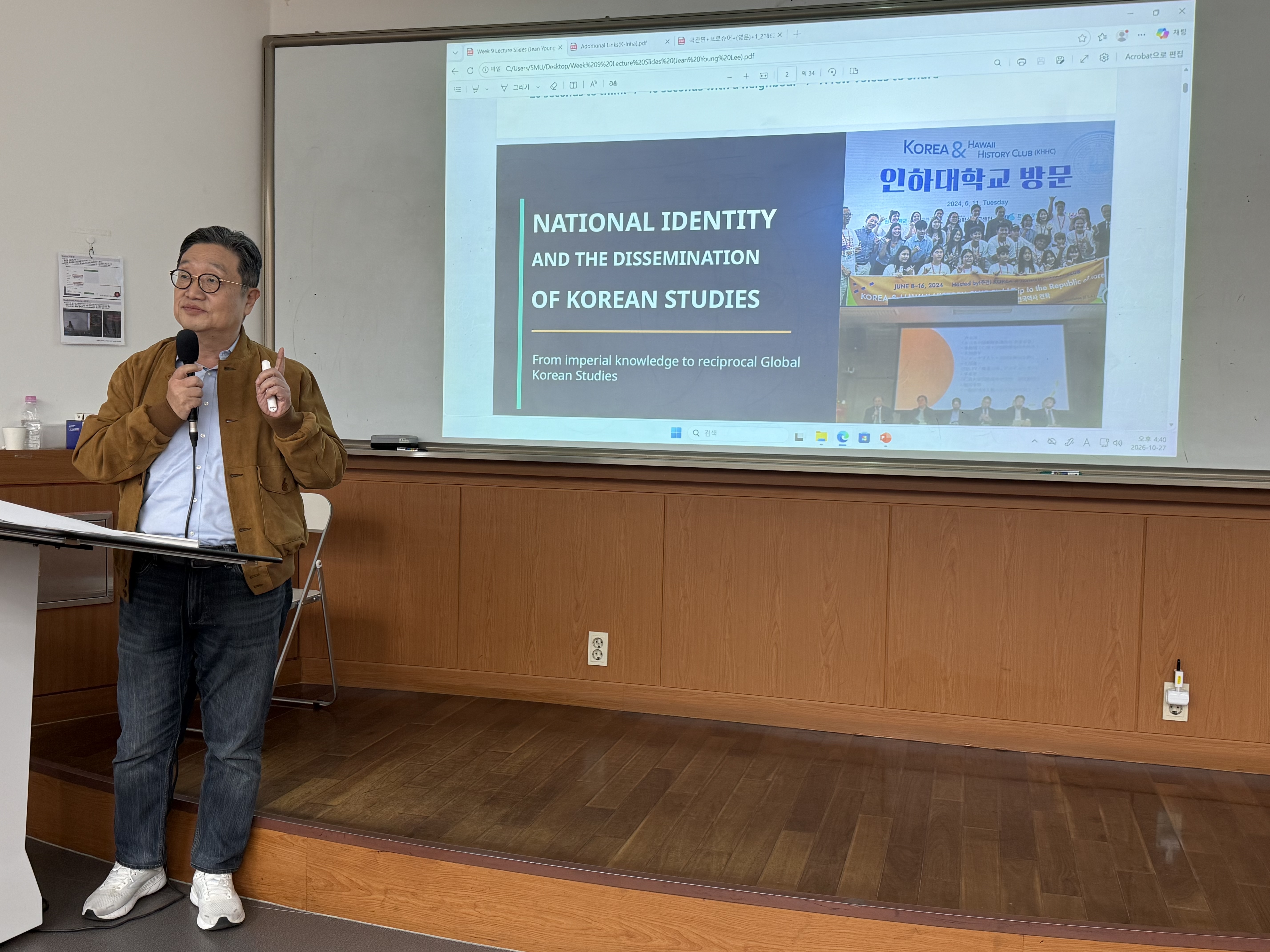
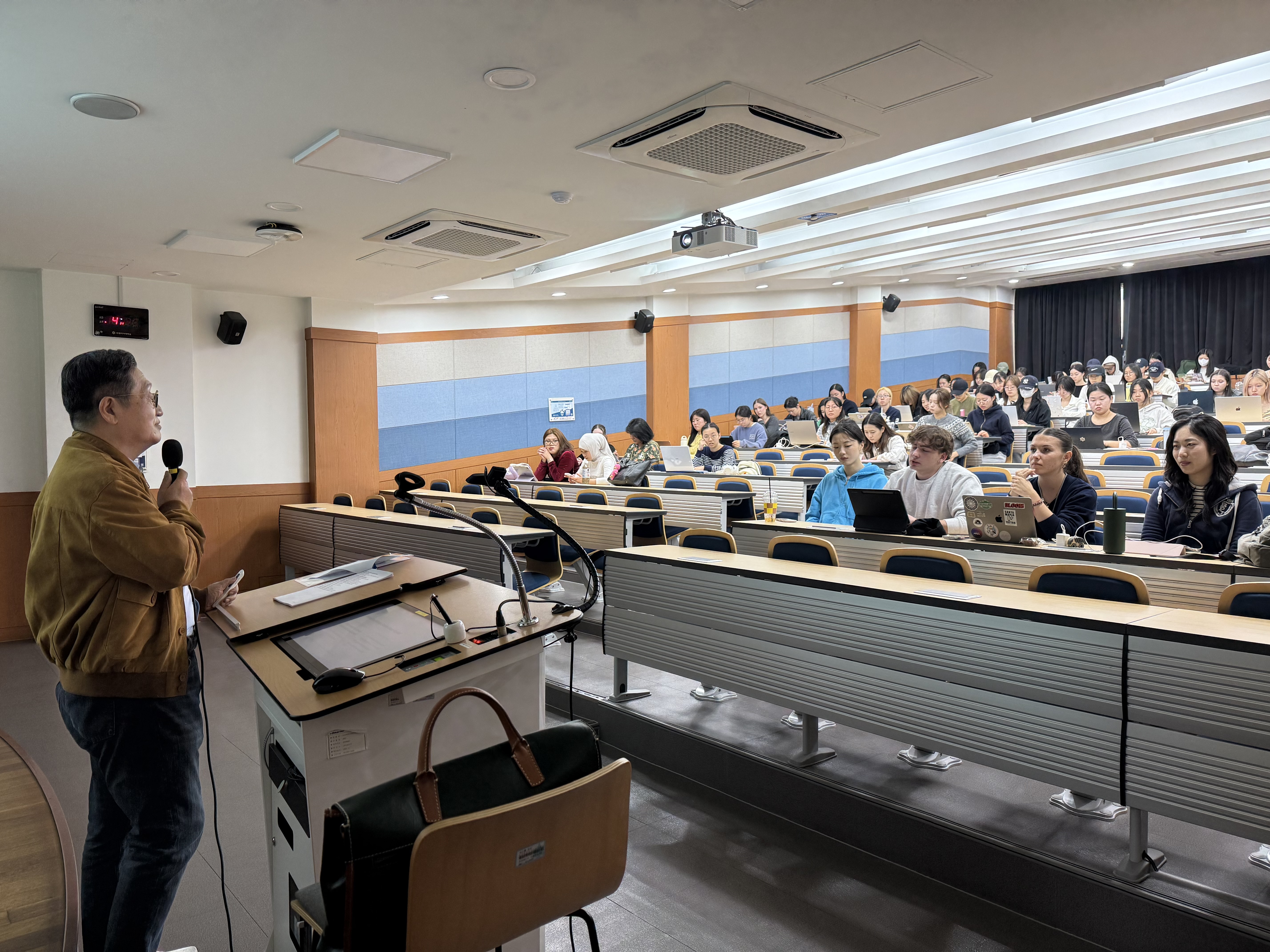
Professor Jean-Young Lee, Director of the Inha Center for International Studies (Inha CIS) at Inha University, delivered a special lecture titled “National Identity and the Dissemination of Korean Studies” at Sookmyung Women’s University on October 27, 2026. The lecture examined the historical evolution of Korean Studies in the context of international politics and explored how the field is being reshaped by increasingly diverse voices and perspectives beyond national and cultural boundaries.
Framing his discussion around the question “Who defines Korea?”, Professor Lee traced the evolution of Korean Studies from the study of Korea through external perspectives during the imperial era to its institutionalization as a field of strategic area studies during the Cold War. He then examined the expansion of Korean-led academic and cultural initiatives in the post-Cold War period and the emergence of Global Korean Studies as a field increasingly shaped by diverse participants in knowledge production. He emphasized that the evolution of Korean Studies reflects not only a broadening of its subject matter but also a fundamental shift in who has the authority to produce, interpret, and define knowledge about Korea.
Professor Lee also challenged conventional understandings of Korean identity based solely on territorial boundaries or nationality. He explained how perceptions of Korea and Korean identity are continuously reshaped through interactions among South and North Koreans, overseas Korean communities, migrants, and global audiences engaging with Korean culture. Turning to the global rise of the Korean Wave (Hallyu) and digital platforms, he highlighted how international audiences actively translate, reinterpret, and create cultural content, demonstrating that Korean culture evolves through cross-border interaction rather than one-way dissemination.
The lecture also addressed the importance of reciprocity in academic exchange and public diplomacy, particularly in engagement with the Global South. Professor Lee noted that Korea’s experiences of colonialism, war, economic development, and democratization offer valuable opportunities for international comparison and dialogue. He cautioned, however, against presenting Korea’s experience as a model to be transmitted unilaterally. Instead, he called for greater recognition of local perspectives and interpretations, emphasizing collaborative research, jointly developed curricula, and mutual learning as essential foundations for a more inclusive approach to Korean Studies.
Professor Lee also introduced Inha CIS initiatives in social science-based Korean Studies education and the expansion of online learning opportunities. Drawing on the Center’s interdisciplinary approach, he outlined ways to broaden access to Korean Studies and strengthen international academic connections by integrating contemporary issues such as international relations, diaspora and migration, public diplomacy, and cultural content into educational programs.
The lecture underscored a central message: the future of Korean Studies lies not simply in bringing knowledge about Korea to the world, but in creating opportunities for scholars and learners across borders to shape that knowledge together.
 |
 |