


K-Academic Diffusion Activities
K-Academic Diffusion Activities
K-Connectors 3rd Cohort Team 'Korus' Conducts Creative Program “Double the Voices” for Refugee Children at Yeolguk Children’s School
- Created 2025.12.08
- Author
- Views449
On November 24 (Mon), the Korus Team of the 3rd cohort of K-Connectors conducted a creative educational program titled “Double the Voices” for children at Yeolguk Children’s School, with the aim of fostering multilingual sensitivity. The program was designed to reinterpret each child’s linguistic and cultural background as a creative asset and to help participants experience their own languages as a positive part of their identity. Notably, the Korus Team took part in the entire process—from planning and preparation to on-site implementation—making the activity particularly meaningful.
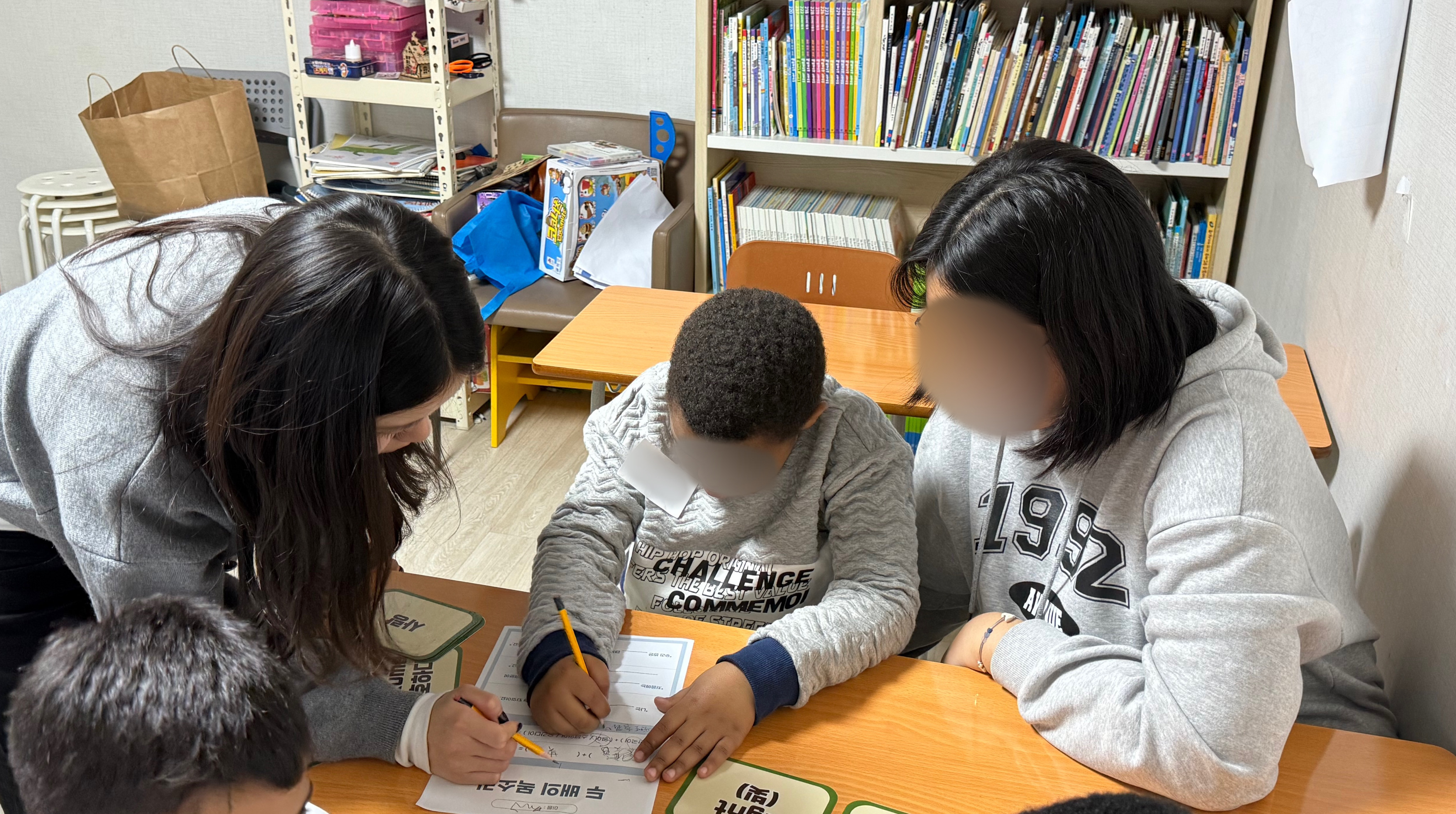
The program was preceded by a structured preparation phase. The Korus Team first surveyed the nationalities and languages spoken by participating children and, based on this information, created word cards combining Korean and the children’s native languages. Languages such as English, French, and Ugandan languages were included. To ensure accessibility without the need for language specialists, the cards were designed using simple, intuitive words. All materials were developed with careful consideration of refugee children’s linguistic experiences, and the team invested significant time in preparation so that children could naturally express their linguistic resources.
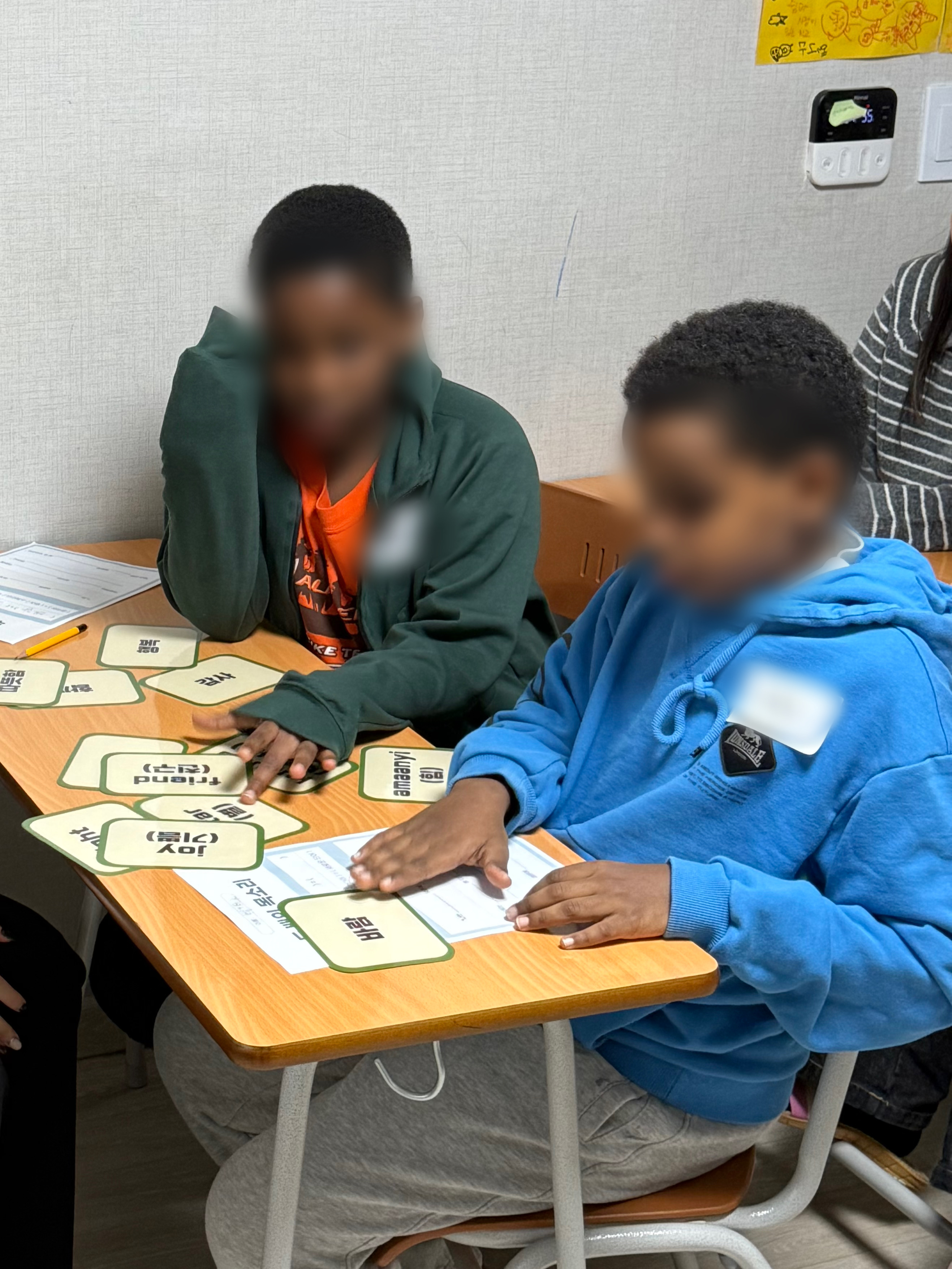
The main activity began with an introduction to the concept of “Double the Voices.” This concept conveys the idea that when different languages come together, they can create new meanings, encouraging refugee children to express rather than conceal their native languages. Following this introduction, the children participated in an activity where they combined Korean word cards with word cards from their native languages to create new words. For example, by combining “dream” (Korean) with “nhà” (Vietnamese for “house”), one child created “Dream-nha,” defining it as “a house where dreams grow.” Through such activities, the children demonstrated linguistic creativity and added their own interpretations to the newly formed words.
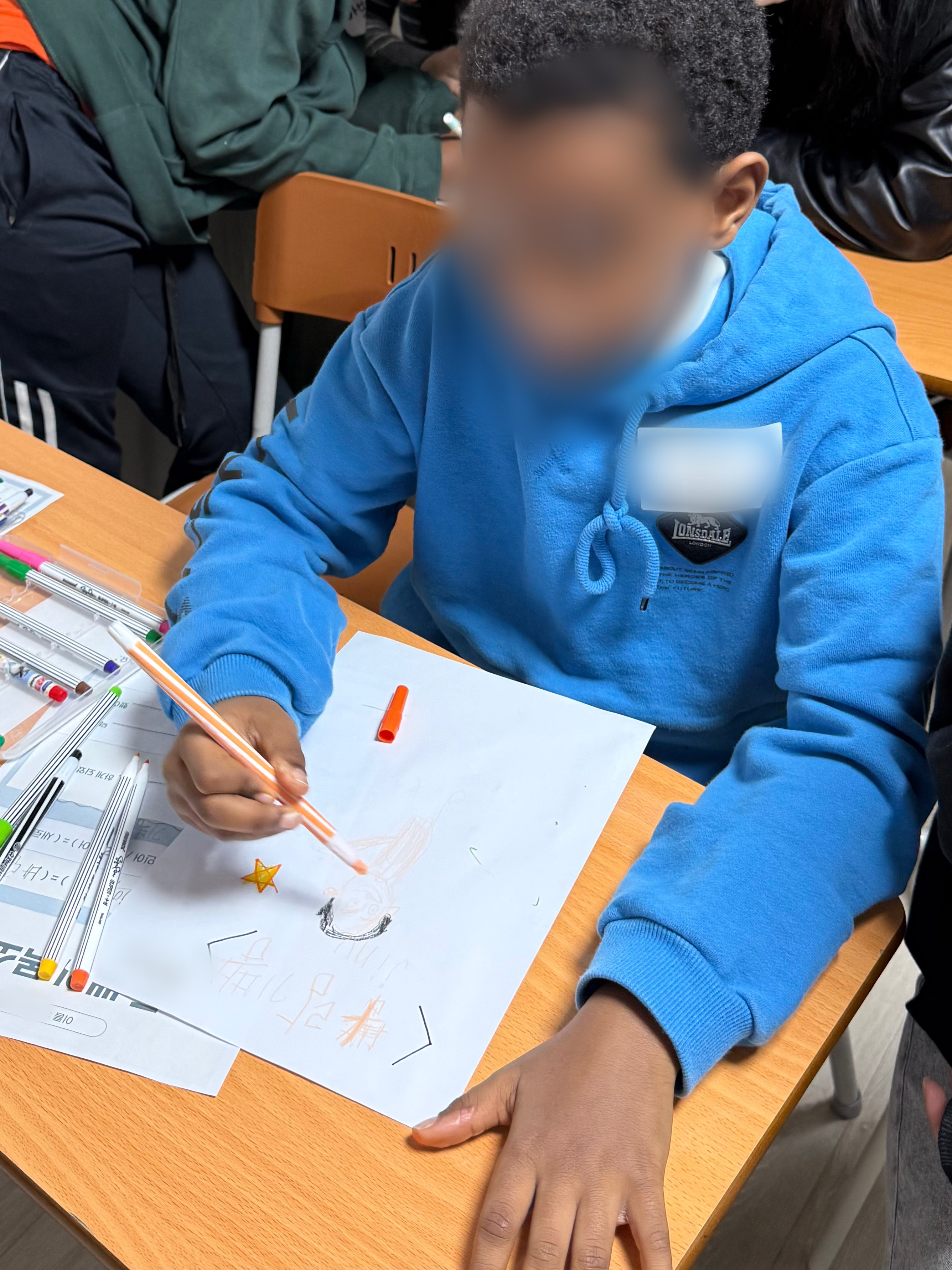
Once the words were completed, the children engaged in a character creation activity, imagining what their words might look like and expressing them through drawings. This process went beyond a simple art activity; by visualizing the personality, emotions, and functions of their words, the children showed a high level of engagement. The Korus Team supported this process by asking guiding questions, helping the children naturally connect language with imagery.
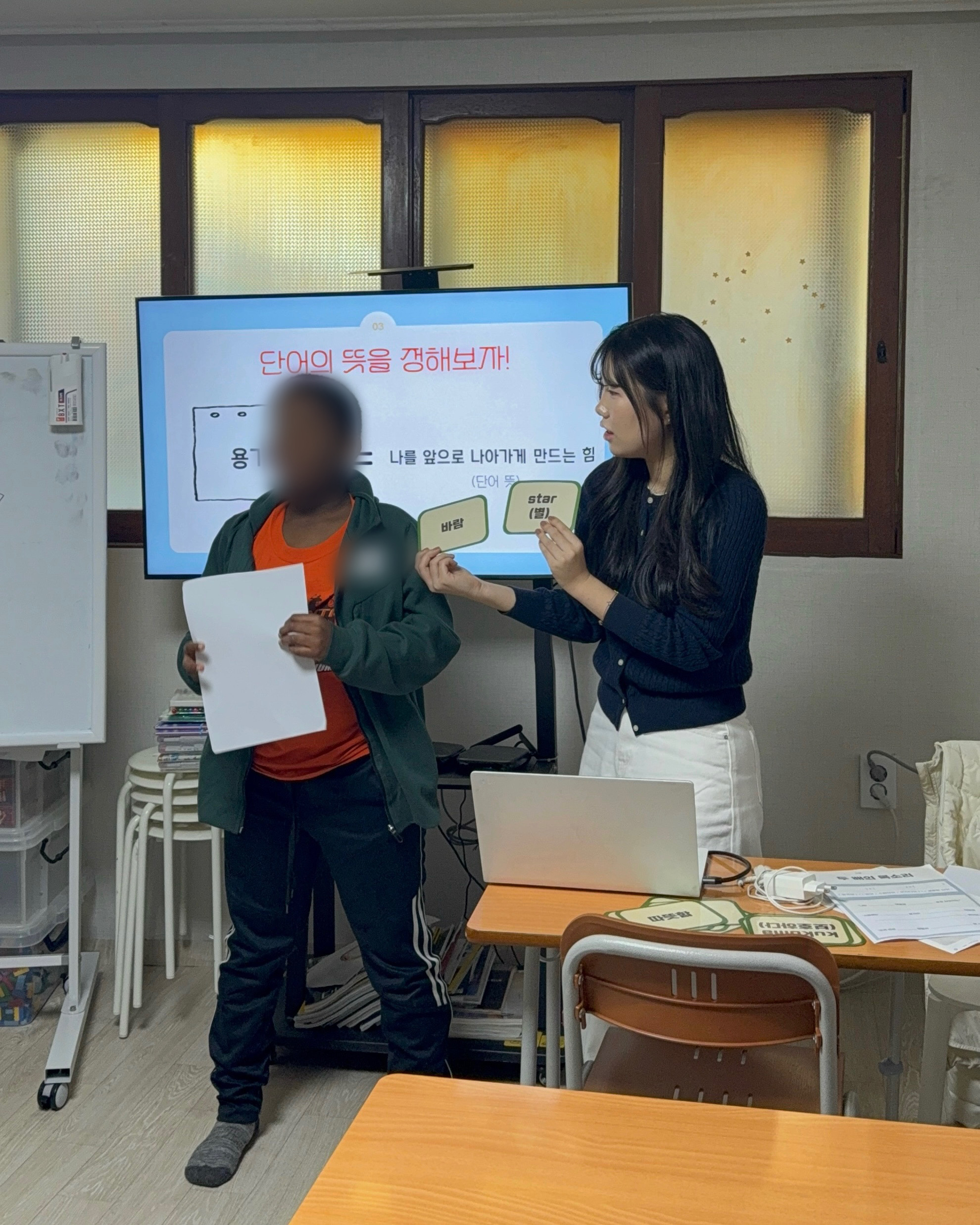
During the presentation session, each child introduced the meaning of their word and the character they had created. Rather than merely describing their drawings, the children shared why they chose certain combinations, what the words meant to them personally, and how they might be used in different situations. For children who felt hesitant about presenting, team members provided gentle support, helping create a comfortable and encouraging atmosphere.
The original program plan included a “sentence relay storytelling” session, in which children would create sentences using their words, combine them into a collective story, and ultimately produce an audiobook. However, considering the children’s ages and levels of comprehension, the Korus Team flexibly adjusted the program on site. While the children were highly engaged in word creation, the team determined that sentence construction might be overly challenging and therefore shifted the focus to character creation. This adaptive approach was positively received, as it enhanced both engagement and immersion.
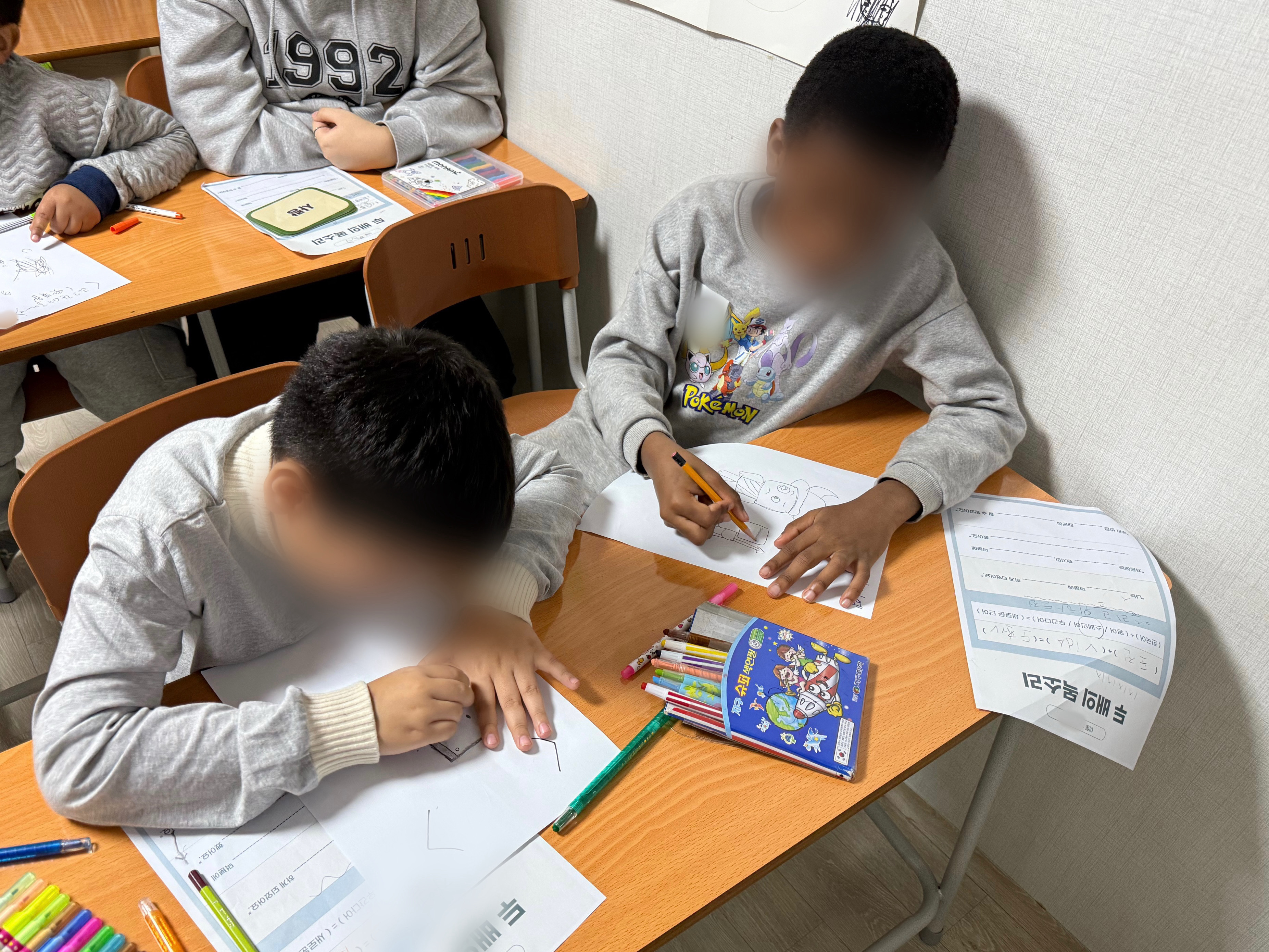
Reflecting on the program, the Korus Team noted that “this activity provided children with a meaningful opportunity to use their own languages as the starting point for creative expression and to imagine a world where multiple languages coexist.” They added that “while a child’s native language is central to their identity, few educational programs actively incorporate it. ‘Double the Voices’ is grounded in recognizing children’s languages as assets, and we plan to continue developing this approach in the future.”
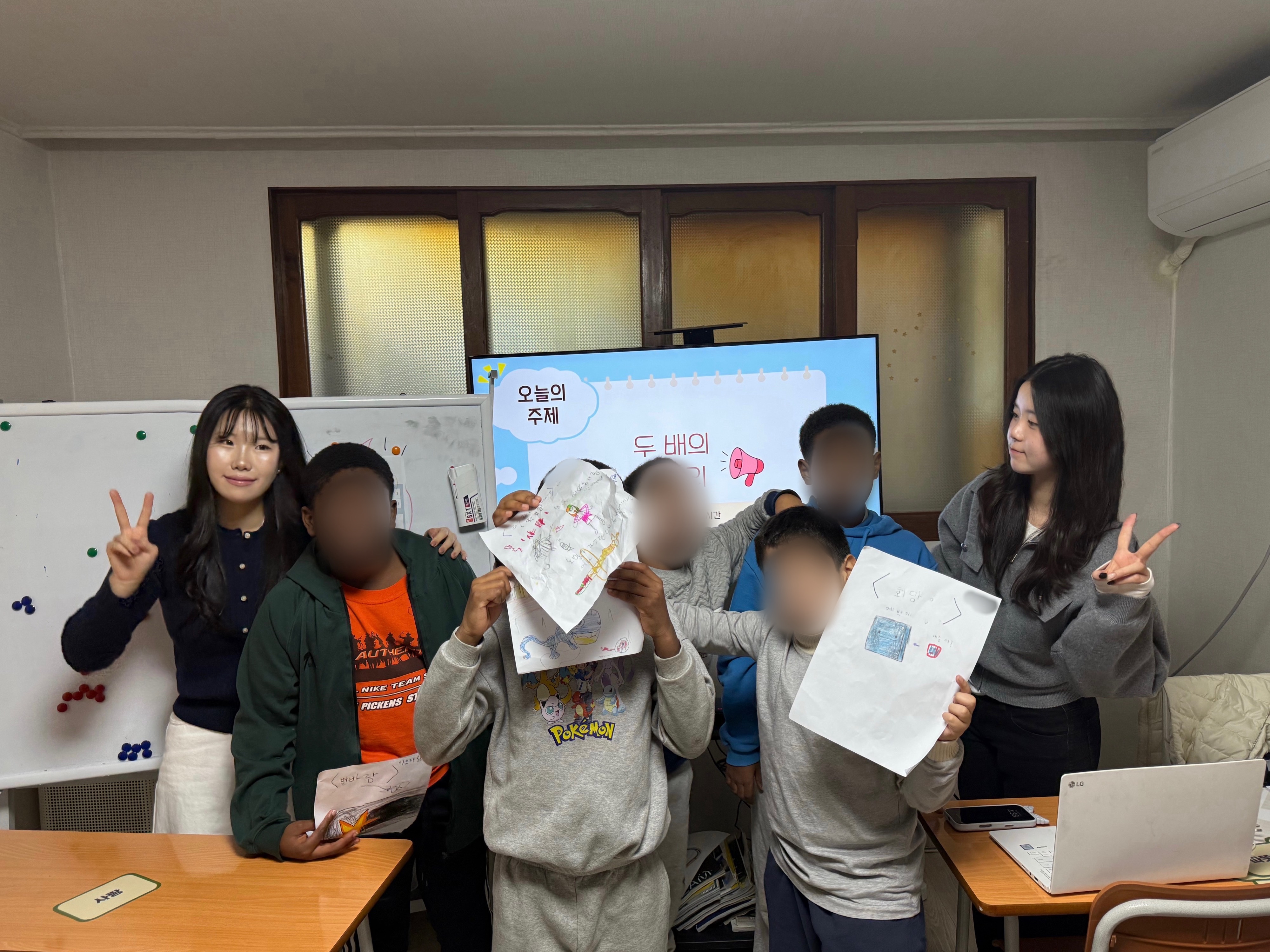
This program by the Korus Team represents a meaningful example of viewing refugee children’s linguistic diversity as a positive resource and highlights the potential of multilingual, creativity-based educational activities. Looking ahead, the team is exploring ways to expand the outcomes of the program into a digital exhibition and plans to continue developing multicultural educational content based on the experiences gained through this project.