


International Conference
International Conference
K-Connectors 3rd Cohort Korea-Japan University Student Academic Exchange Successfully Concluded... Opening a Chapter for Youth Public Diplomacy
- Created 2026.02.26
- Presenter
- Views174
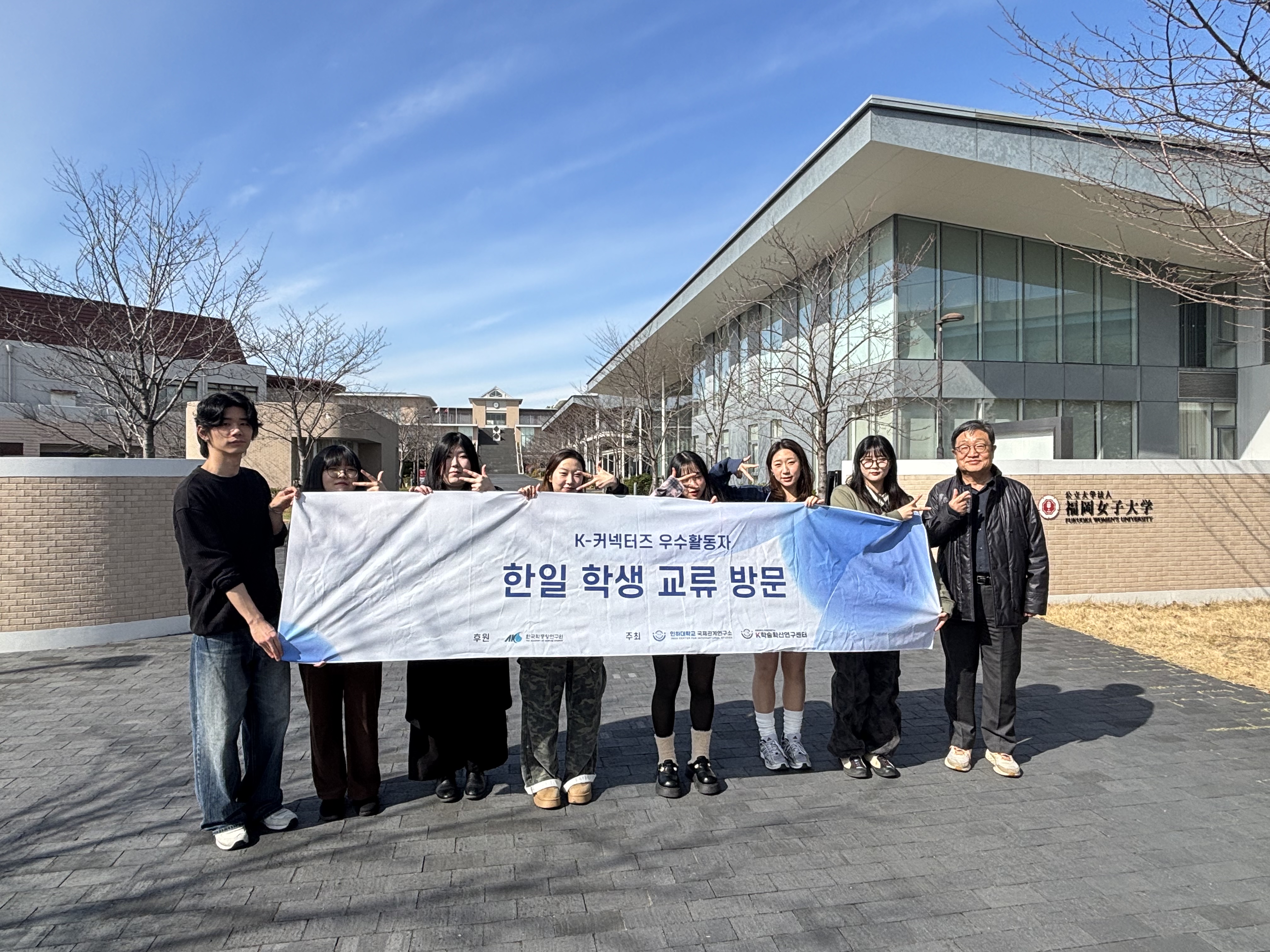
The Center for K-Academic Expansion under the Institute of International Studies at Inha University conducted an academic exchange visit to Fukuoka, Japan, for the outstanding participants of the 3rd K-Connectors from February 25 to 28, 2026. In particular, the Korea-Japan student exchange program held at Fukuoka Women's University on the 26th was organized as a core event to deepen the understanding of Korean studies and expand the practical possibilities of public diplomacy through mutual communication among the youth generation.
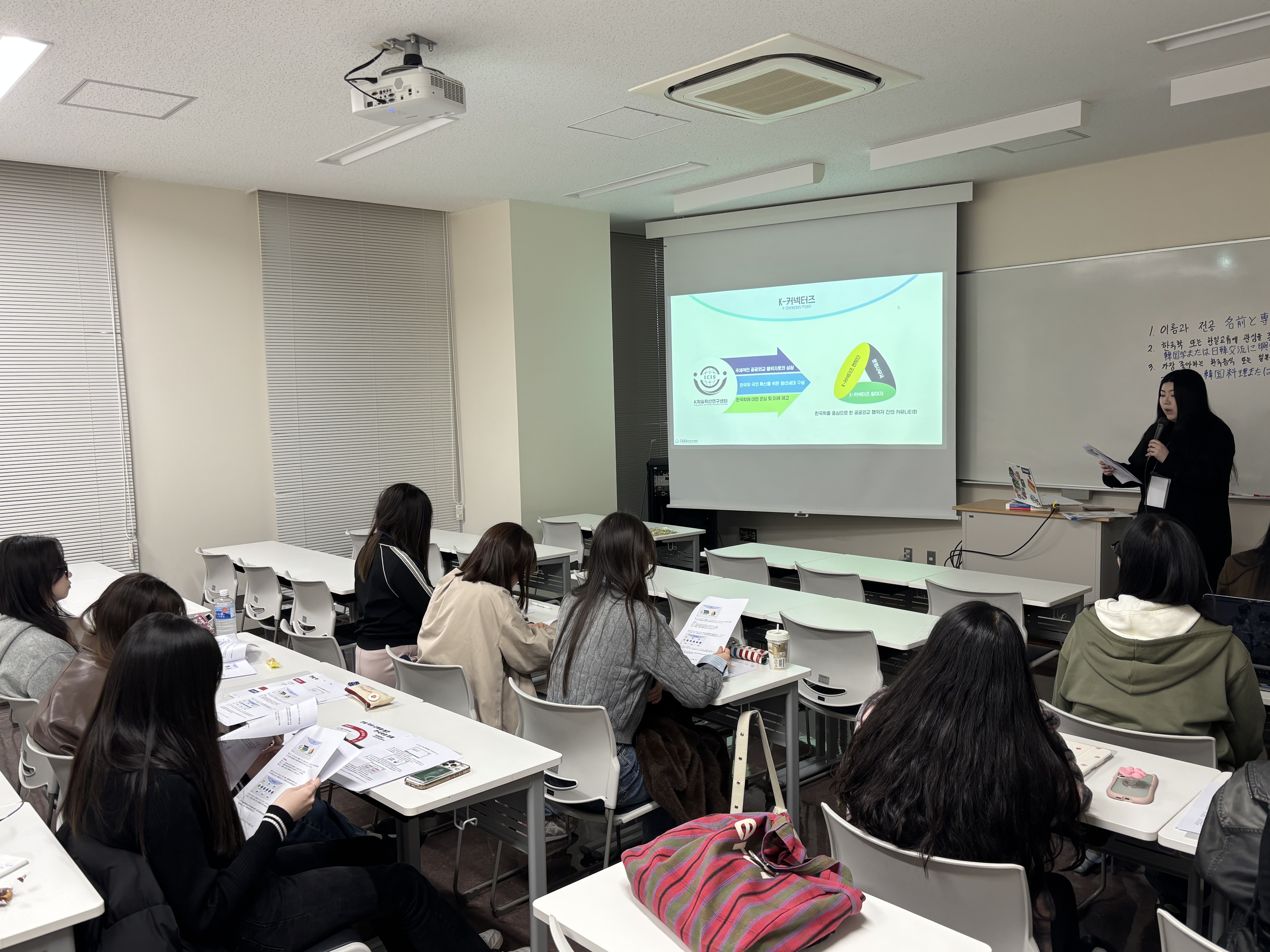
The first part of the event on this day began with an introduction to the Center for K-Academic Expansion and the K-Connectors project by Research Assistant Chae-yeon Lee. After explaining the purpose and operational structure of K-Connectors to the Japanese university students, presentations on the achievements of outstanding teams and individuals followed.
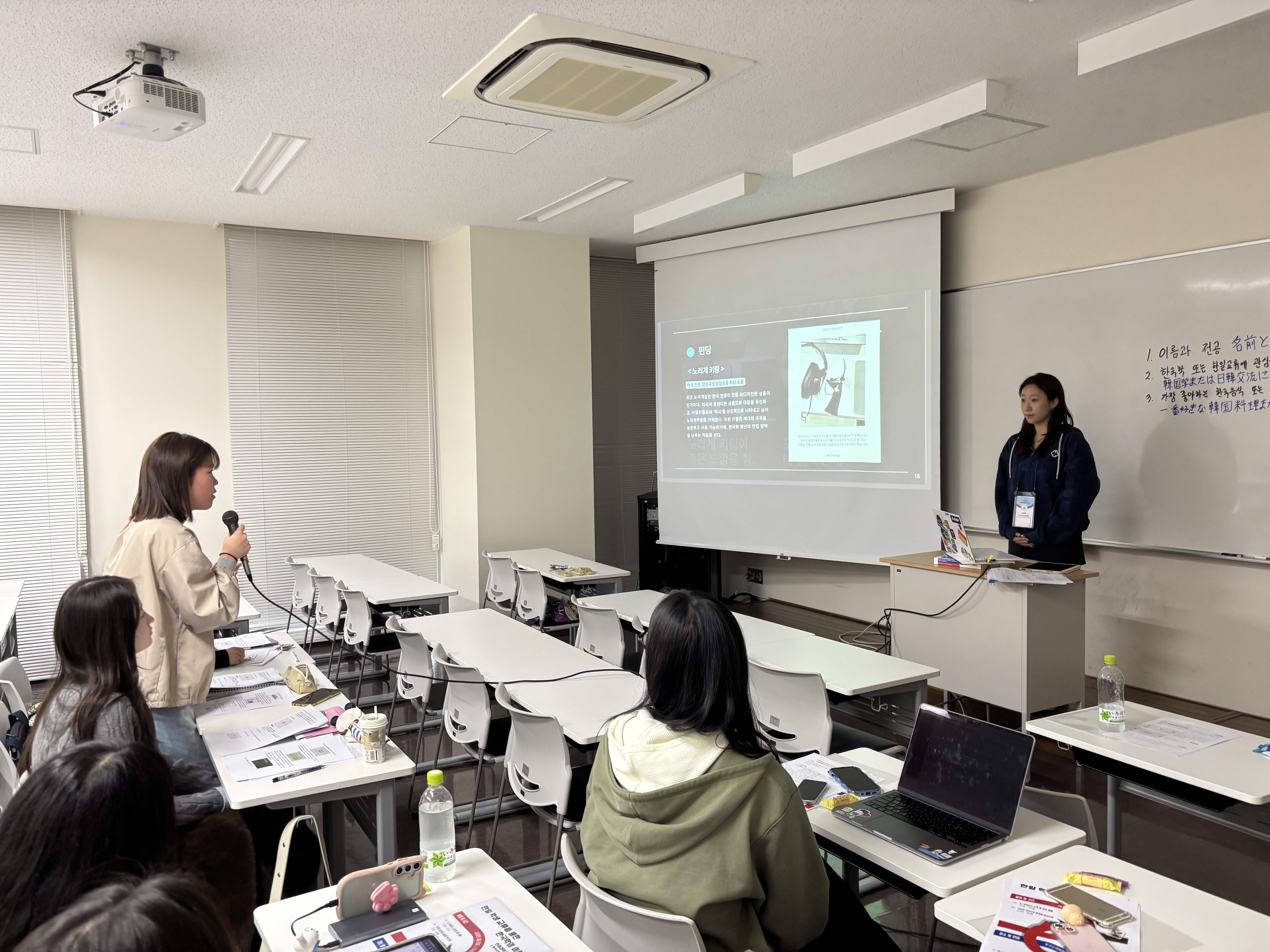
Jae-yoon Lee (Team Together K-hada), an outstanding individual participant, and Seon-ha Kim (Team KOREA: F5) representing an outstanding team, took the podium to share their activity experiences. Jae-yoon Lee stated in his presentation, "I tried to refine my vocabulary and explain the activities easily, considering the foreign audience, which became a great learning opportunity." Seon-ha Kim, presenting the results of a project raising awareness of the history of Sakhalin Koreans, shared, "It was a very meaningful experience to directly present the activities conducted in Korea at an overseas university and exchange opinions with local students."
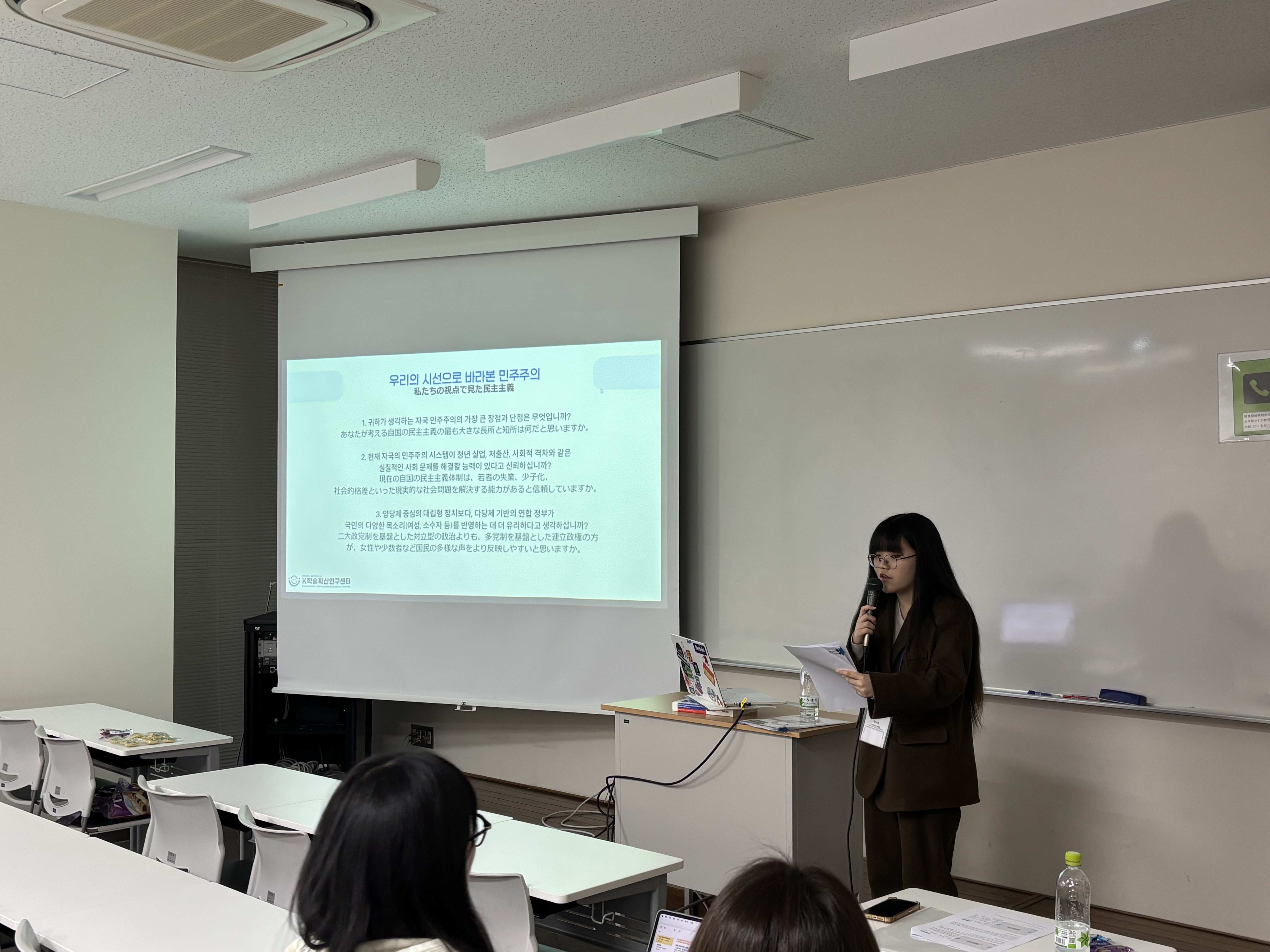
In the second part, a participatory discussion activity by students forming mixed Korea-Japan teams began in earnest, starting with a discussion presentation by Research Assistant Na-rae Park. Based on their prior learning through K-MOOC lectures, the participants engaged in a heated debate on the topic of expanding the discourse on democracy.
The discussion was divided into three main topics. First, in comparing the advantages and limitations of democracy in Korea and Japan, participants exchanged the social contexts of each country, likening Korea's democracy, with its high participation, to a 'hot democracy,' and Japan's, with its low political volatility and strong stability, to a 'cold democracy.' Second, regarding the capacity to solve social problems such as youth unemployment and the low birth rate, the importance of securing structural channels through which the demands of the youth generation can lead to actual policies, beyond the mere existence of institutions, was emphasized. Third, in the discussion comparing the two-party and multi-party systems in terms of political institutions, critical thinking was exchanged regarding methods to guarantee the opinions of minorities institutionally.
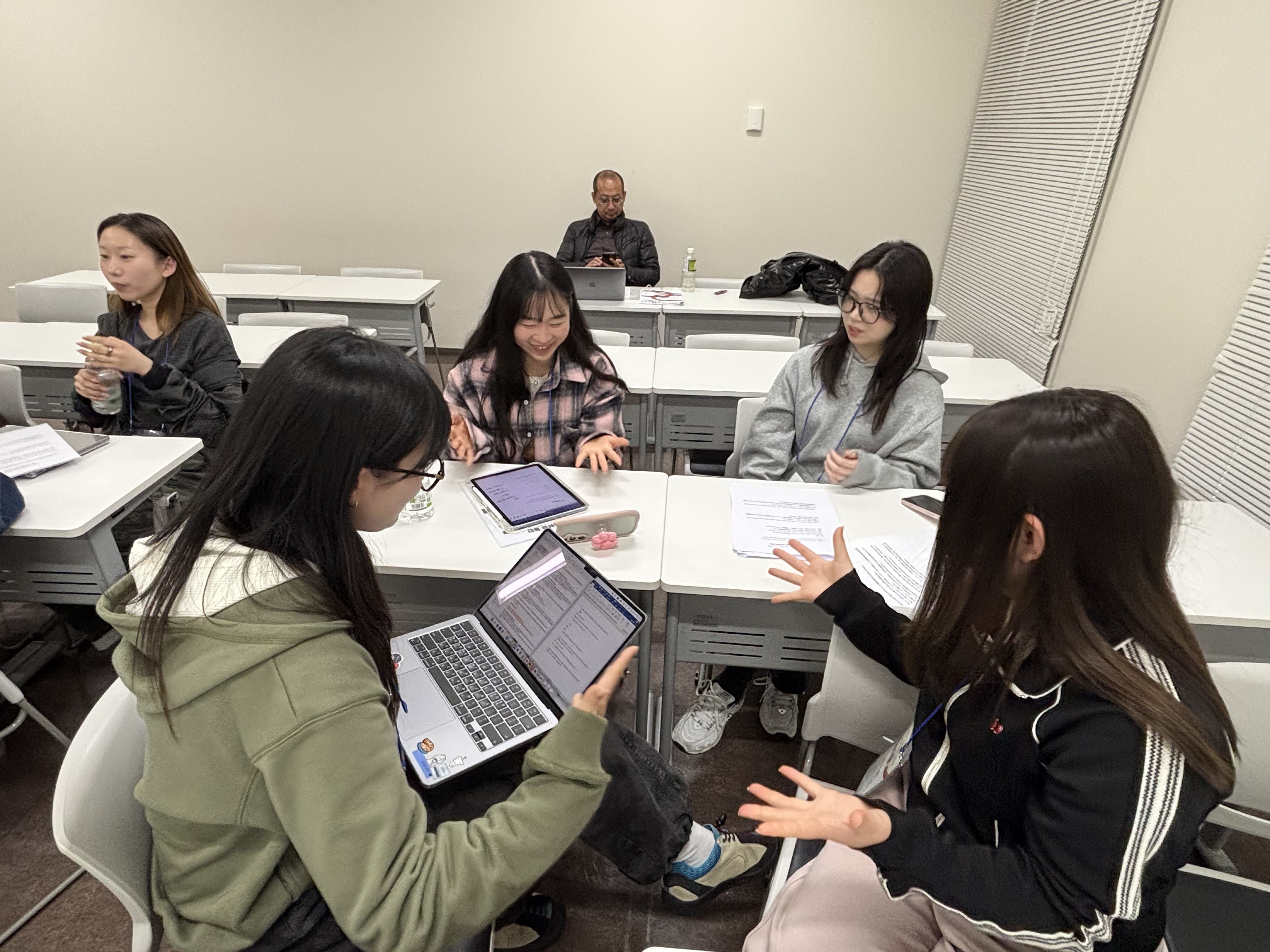
In this process, participants practiced the core value of public diplomacy, which is understanding and respecting different political and social environments. Seon-ha Kim, who participated in the discussion, remarked, "I heard that Japanese society is also experiencing structural problems like the low birth rate and youth employment issues, similar to Korea, and that young people feel frustrated that politics is not creating real change." She added, "I felt deep empathy that young people living in different societies share similar concerns." Jae-yoon Lee also noted, "It was a beneficial time to understand the sentiments of Japanese citizens that cannot be known just through writing by listening to their perspectives on their own politics."
The professors in attendance provided a general review, stating, "The exchange of opinions based on different cultural and social backgrounds deepened the discussion, making it a meaningful time for participants to broaden their global perspectives."
This exchange activity serves as an example showing that the K-Connectors program can expand beyond a simple domestic activity into a platform for Korean studies expansion and youth public diplomacy on an international level. Moving forward, the Institute of International Studies and the Center for K-Academic Expansion at Inha University plan to continuously operate the K-Connectors program and actively support and promote the youth generation so they can proactively participate in global social issues and grow as subjects of academic exchange. Furthermore, based on the achievements of this Fukuoka academic exchange, K-Connectors plans to further expand its role as a leading figure in youth public diplomacy that promotes the value of Korean studies at home and abroad and fosters mutual understanding and solidarity.