본문으로 바로가기

International Conference

International Conference

글자 크게 글자 작게 인쇄

International Relations of Korea and Japan: Challenges and Responses

  • Created 2026.04.25
  • Presenter2026-04-25
  • Views10


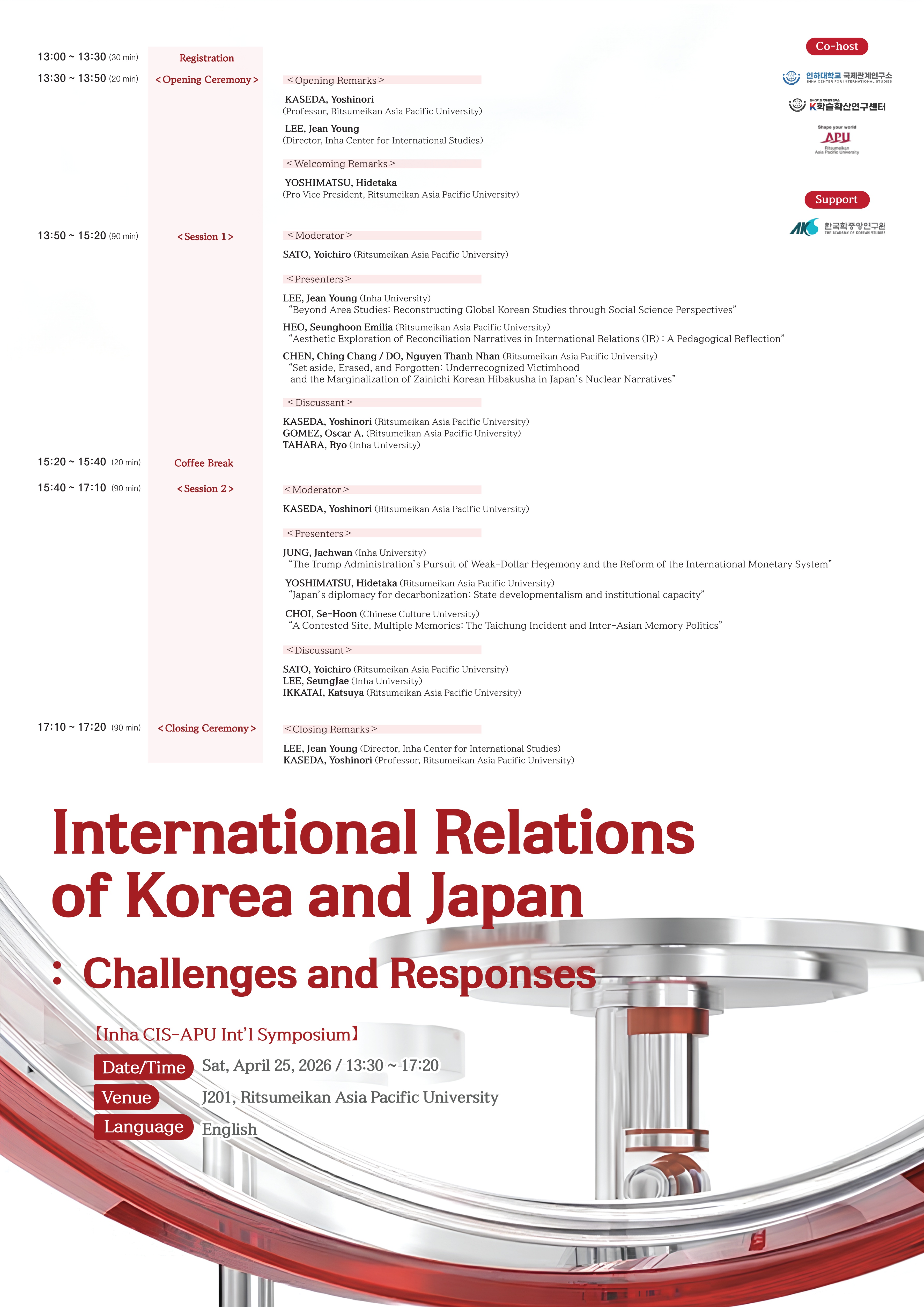
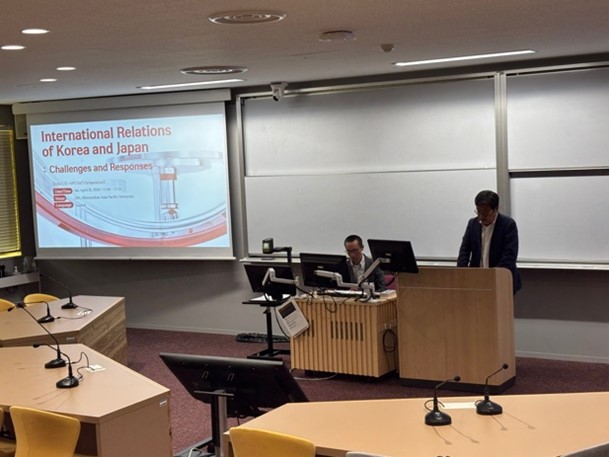
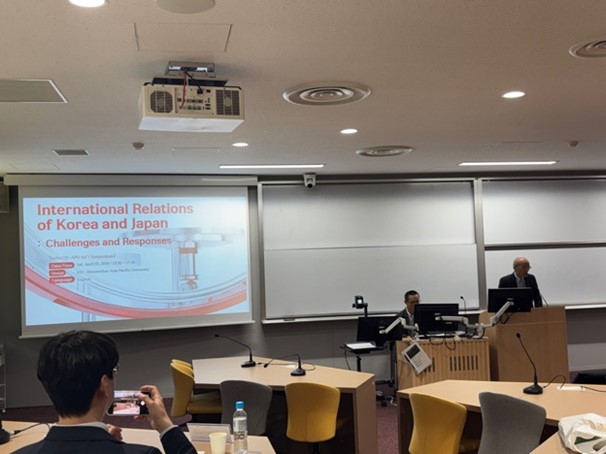
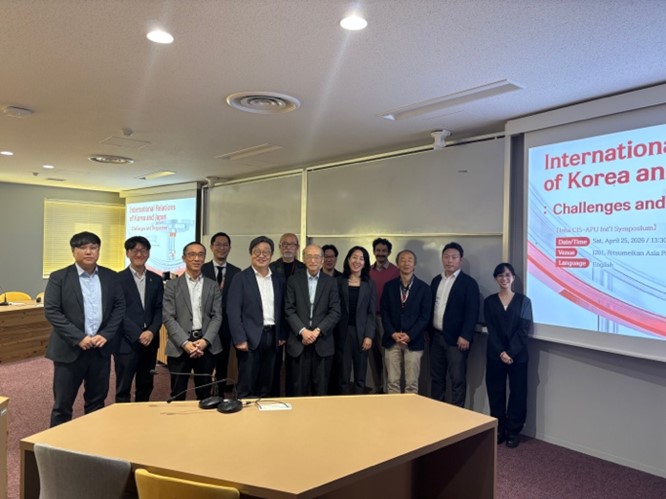
 The K-Academic Expansion Research Center at the Inha Center for International Studies co-hosted the international conference titled “International Relations of Korea and Japan: Challenges and Responses” with Ritsumeikan Asia Pacific University (APU) on Saturday, April 25, 2026, at Classroom J201 of APU in Japan.


 The conference was organized to comprehensively discuss Korea–Japan international relations from political, economic, socio-cultural, and historical perspectives amid growing geopolitical uncertainties and deepening economic interdependence in East Asia, while also exploring new directions for bilateral cooperation.


 During the opening ceremony, Professor Yoshinori Kaseda of APU delivered the opening remarks, followed by Director Jinyoung Lee of the Inha Center for International Studies, who emphasized the importance of Korea–Japan relations research and the global expansion of Korean Studies amid the changing international order.


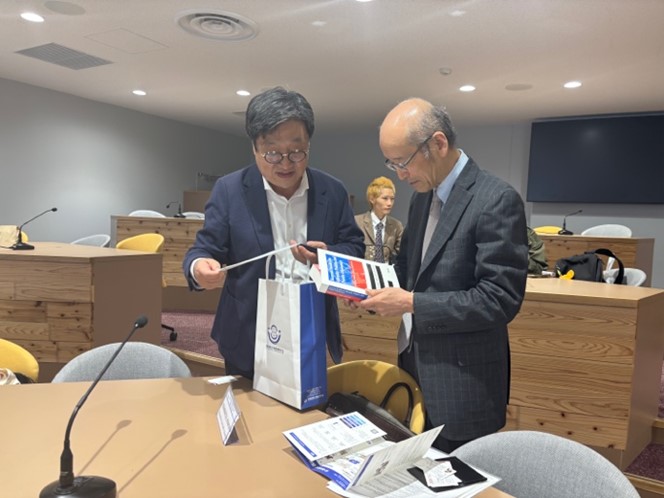
 Vice President Hidetaka Yoshimatsu of APU then delivered welcoming remarks, expressing his hope that the international conference would further strengthen academic exchanges between the two institutions and contribute to sustainable cooperation and mutual understanding in East Asia.


 Session 1 was moderated by Professor Yoichiro Sato of APU and featured presentations and discussions on Korean Studies, socio-cultural conflicts, and historical memory. Director Jinyoung Lee of the Inha Center for International Studies delivered a presentation titled “Beyond Area Studies: Reconstructing Global Korean Studies through Social Science Perspectives,” emphasizing the need to reconstruct Global Korean Studies from a social science perspective beyond the traditional framework of area studies. He also introduced and promoted the Center’s K-MOOC lectures and K-Academic Expansion initiatives to participating professors and students.


 Professor Emilia Seunghoon Hur of APU then presented “Aesthetic Exploration of Reconciliation Narratives in International Relations (IR): A Pedagogical Reflection,” examining the importance of reconciliation narratives in international relations, particularly between states, through an aesthetic perspective. In addition, Professor Tian Qingchang and student Do Nguyen Thanh Nhan of APU presented “Set Aside, Erased, and Forgotten: Underrecognized Victimhood and the Marginalization of Zainichi Korean Hibakusha in Japan’s Nuclear Narratives,” exploring how the experiences of Zainichi Korean atomic bomb victims have been marginalized within Japan’s nuclear narratives. Following each presentation, Professor Yoshinori Kaseda and Professor Oscar A. Gomez of APU, along with Researcher Ryo Tahara of the Inha Center for International Studies, participated as discussants and offered diverse academic perspectives on the presentations.


 Session 2 was moderated by Professor Yoshinori Kaseda of APU and focused on topics including international political economy, decarbonization diplomacy, and Asian memory politics. Professor Jaehwan Chung of the Department of Political Science and International Relations at Inha University presented “The Trump Administration’s Pursuit of Weak-Dollar Hegemony and the Reform of the International Monetary System,” analyzing the Trump administration’s pursuit of weak-dollar hegemony and issues surrounding reform of the international monetary system. Professor Hidetaka Yoshimatsu of APU presented “Japan’s Diplomacy for Decarbonization: State Developmentalism and Institutional Capacity,” discussing the relationship between Japan’s decarbonization diplomacy, state developmentalism, and institutional capacity. Professor Sehun Choi of Chinese Culture University also presented “A Contested Site, Multiple Memories: The Taichung Incident and Inter-Asian Memory Politics,” examining competing memories surrounding the Taichung Incident and the significance of memory politics in Asia. After the presentations, Professor Yoichiro Sato of Ritsumeikan Asia Pacific University, Research Professor Seungjae Lee of the Inha Center for International Studies, and Professor Katsuya Ikkatai of APU joined as discussants and engaged in in-depth discussions on the topics presented.


During the closing ceremony, Director Jinyoung Lee of the Inha Center for International Studies and Professor Yoshinori Kaseda of APU delivered closing remarks, evaluating the achievements of the conference and expressing expectations for continued academic exchange and expanded joint research between the two institutions.


This international conference served as a meaningful platform where Korean and Japanese scholars engaged in multilayered discussions on major issues surrounding Korea–Japan relations and the international order in East Asia. In particular, the conference was significant in that it examined Korea–Japan relations within a broader international context through diverse themes such as political economy, decarbonization diplomacy, history and memory, and socio-cultural educational spaces, while also exploring new research agendas for peace and cooperation in East Asia.


The conference was jointly organized by the K-Academic Expansion Research Center at the Inha Center for International Studies and APU, with support from the Academy of Korean Studies.


첨부파일