본문으로 바로가기

International Conference

International Conference

글자 크게 글자 작게 인쇄

Strategic Competition, AI Governance, and Geoeconomic Transformation in Northeast Asia: Implications for Korea–Mongolia Cooperation

  • Created 2026.05.08
  • Presenter2026-05-08
  • Views6

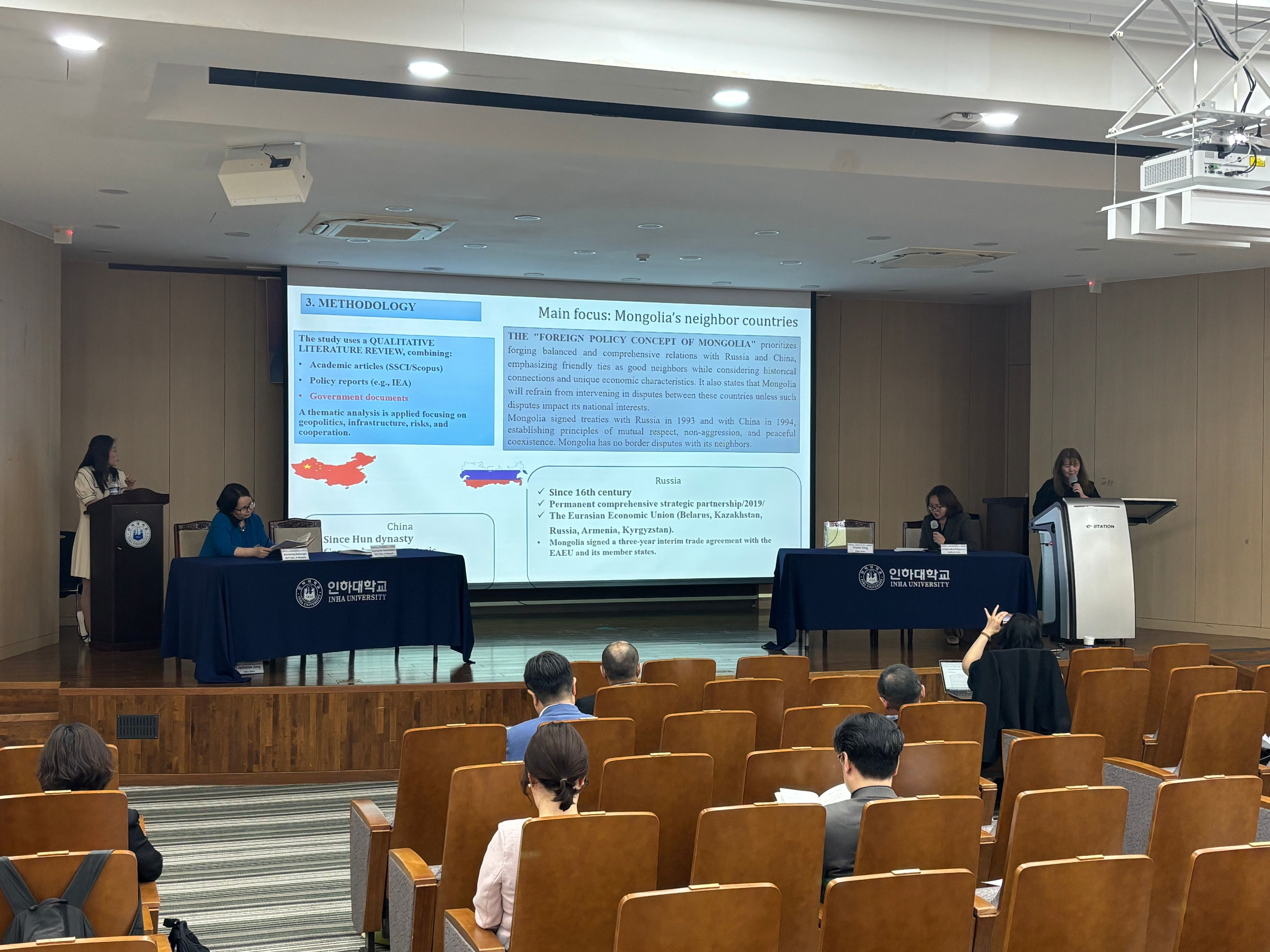
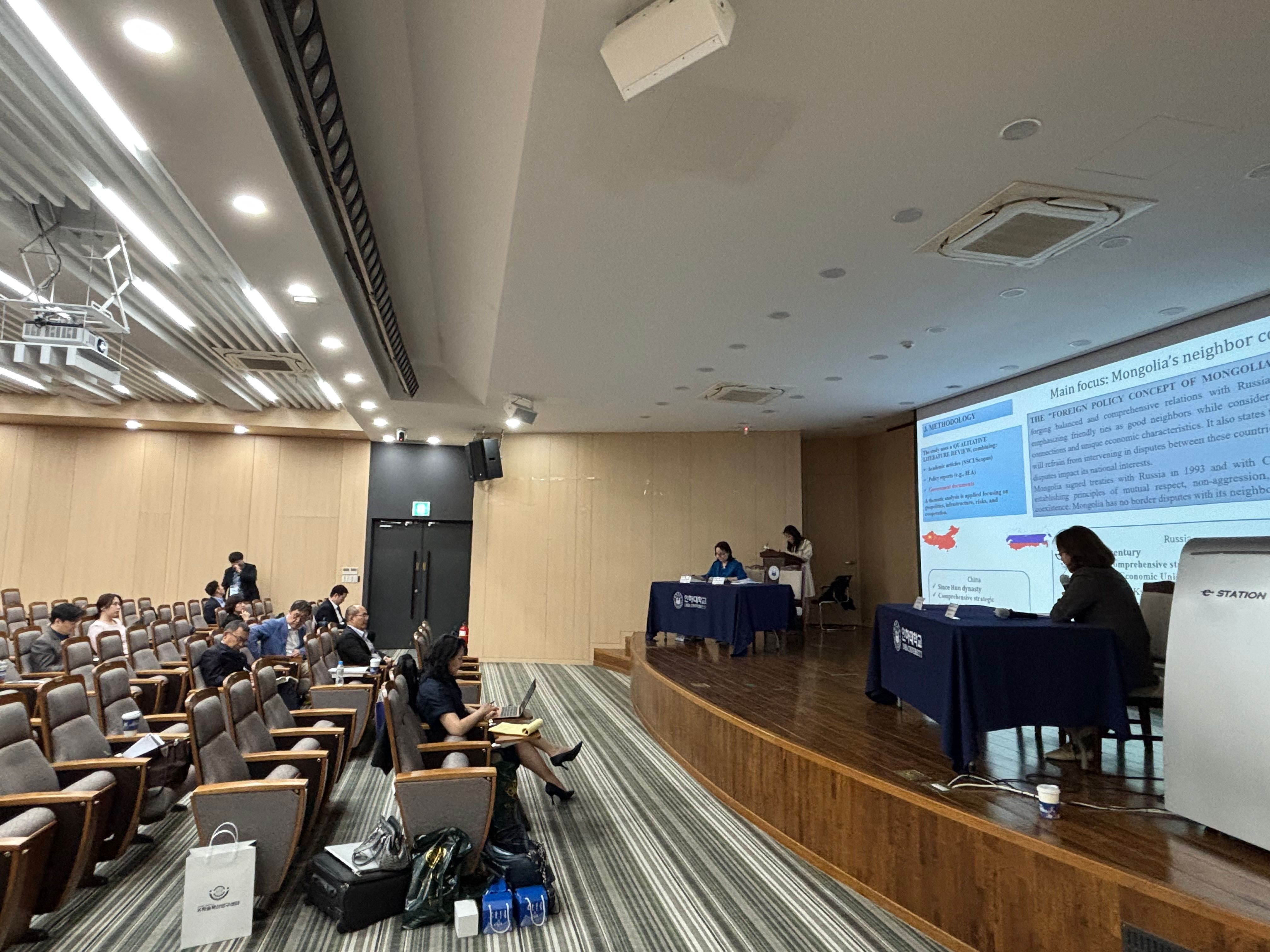
 The K-Academic Expansion Research Center under the Inha Center for International Studies co-hosted an international conference with the School of Political Science, International Relations and Public Administration (SPSIRPA) at the National University of Mongolia on Friday, May 8, 2026, at Hyunkyung Hall in the Main Building of Inha University.


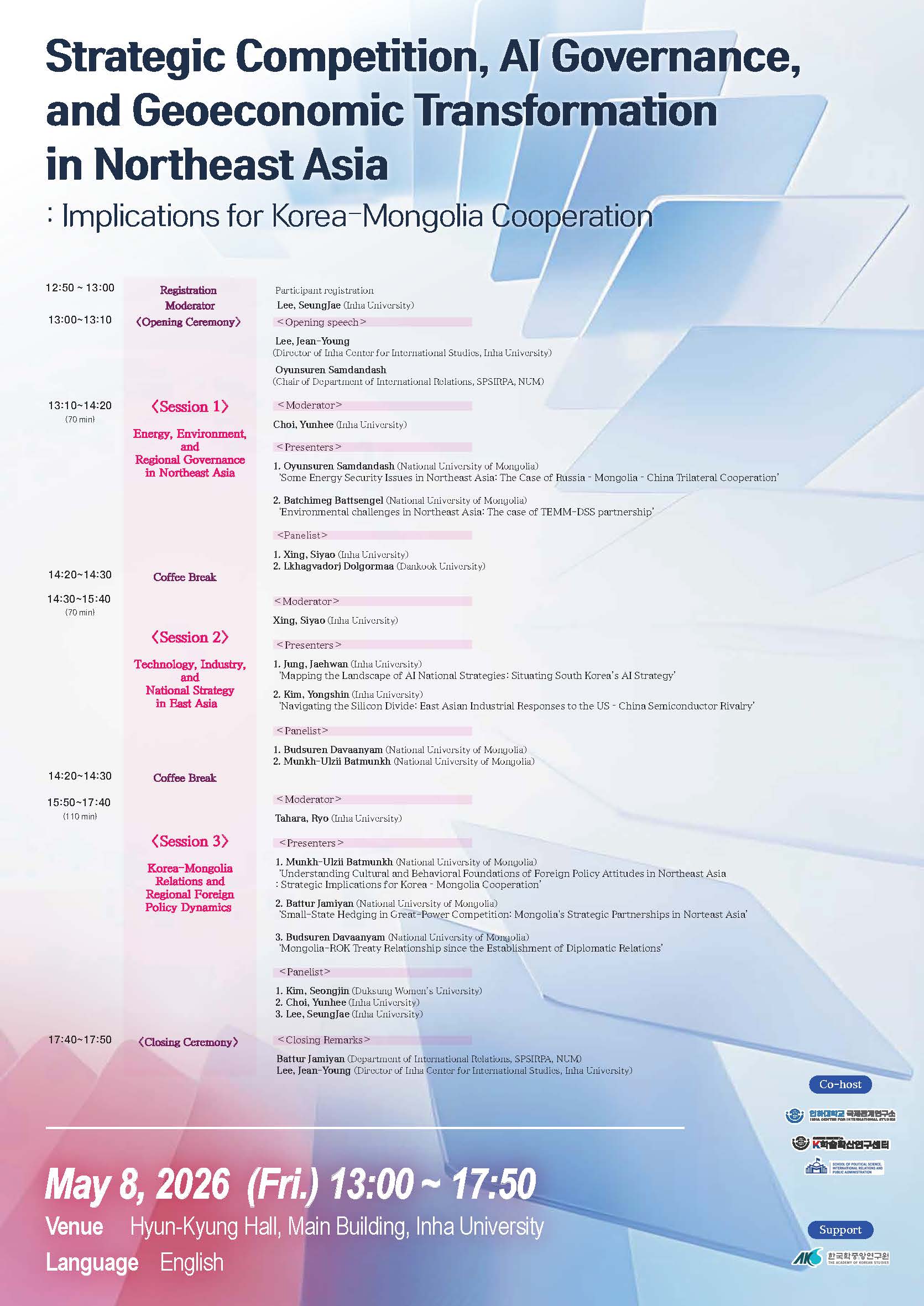
 The conference was held under the theme, “Strategic Competition, AI Governance, and Geoeconomic Transformation in Northeast Asia: Implications for Korea–Mongolia Cooperation.” It was organized to discuss possible directions for cooperation between Korea and Mongolia amid intensifying strategic competition, rapid advancements in artificial intelligence (AI), and ongoing geoeconomic transformation in Northeast Asia.
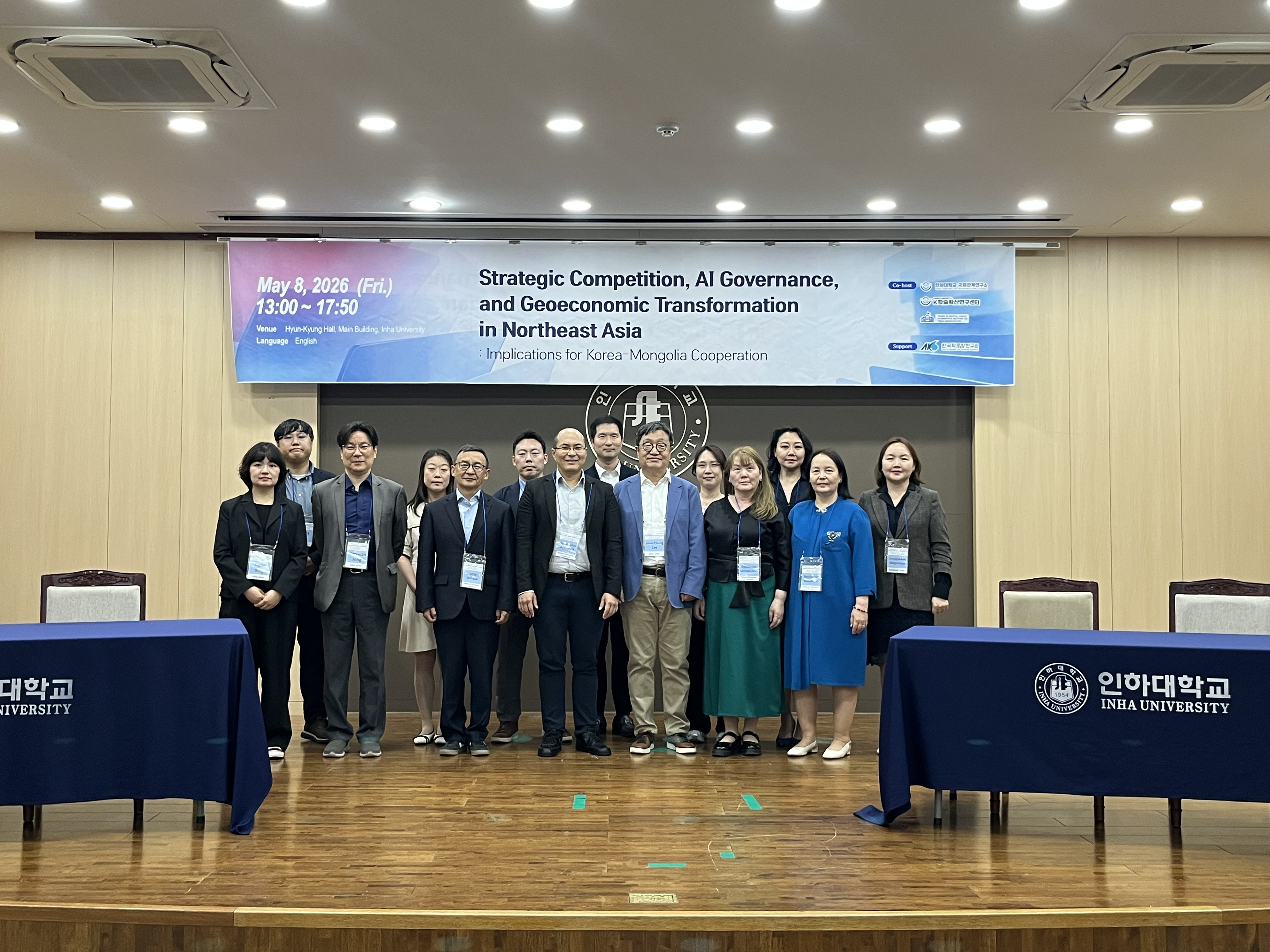
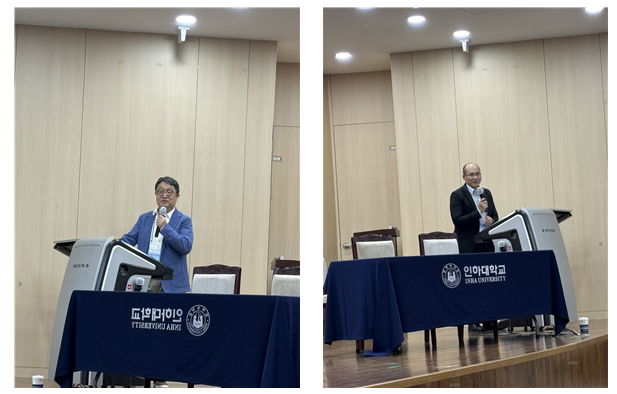


 In particular, this conference was meaningful in that it comprehensively examined how various issues—including AI governance, economic security, energy security, and regional connectivity—are affecting the regional order in Northeast Asia and Korea–Mongolia cooperation amid the rapidly changing international order. The event also marked another milestone in the more than 20 years of academic exchange and cooperation between the Inha Center for International Studies and the School of Political Science, International Relations and Public Administration at the National University of Mongolia, further contributing to the expansion of research networks and the deepening of academic collaboration between the two institutions.


 During the opening ceremony, Director Jinyoung Lee of the Inha Center for International Studies and Munkh-Ulzii Batmunkh, Head of the Department of International Relations at the National University of Mongolia, delivered opening remarks emphasizing the significance of the long-standing academic partnership between the two institutions and the need to further expand Korea–Mongolia research cooperation in the future. In particular, both sides highlighted that academic exchange and joint research are becoming increasingly important at both the policy and academic levels amid growing uncertainties in Northeast Asia.


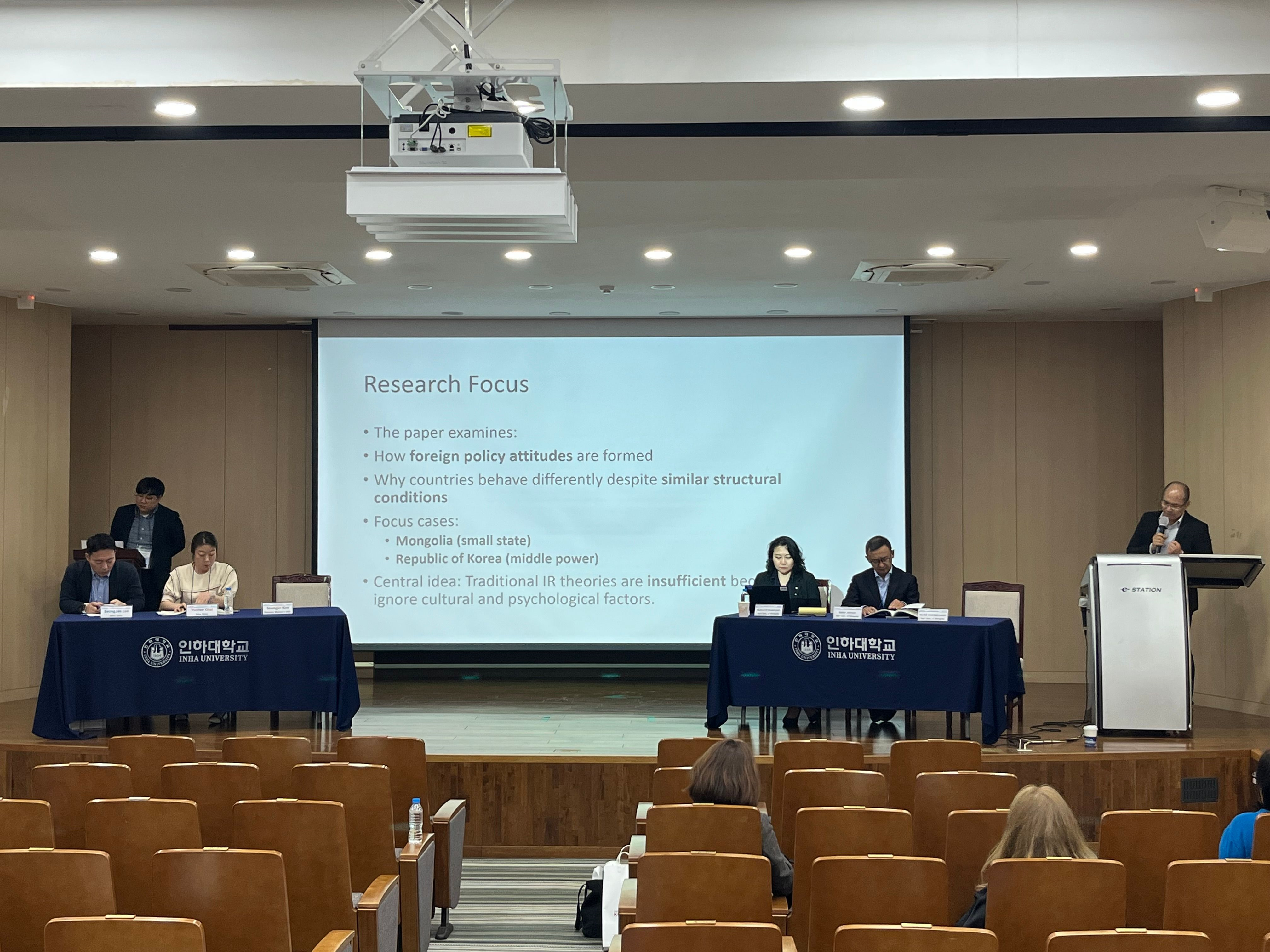
 Session 1 was held under the theme, “Energy, Environment, and Regional Governance in Northeast Asia.” Professor Oyunsuren Samdandash of the National University of Mongolia analyzed energy security issues in Northeast Asia through the framework of trilateral cooperation among Russia, Mongolia, and China, and suggested the potential for Mongolia to play a strategic role in the regional energy connectivity network.


 Professor Batchimeg Battsengel then discussed issues of regional environmental governance, focusing on Northeast Asian environmental cooperation and the TEMM-DSS partnership case. As discussants, Hyoung Sayo, Research Fellow at the Inha Center for International Studies, and Research Professor Lkhagvadorj Dolgormaa of Dankook University shared their perspectives on the challenges of energy security and regional cooperation.


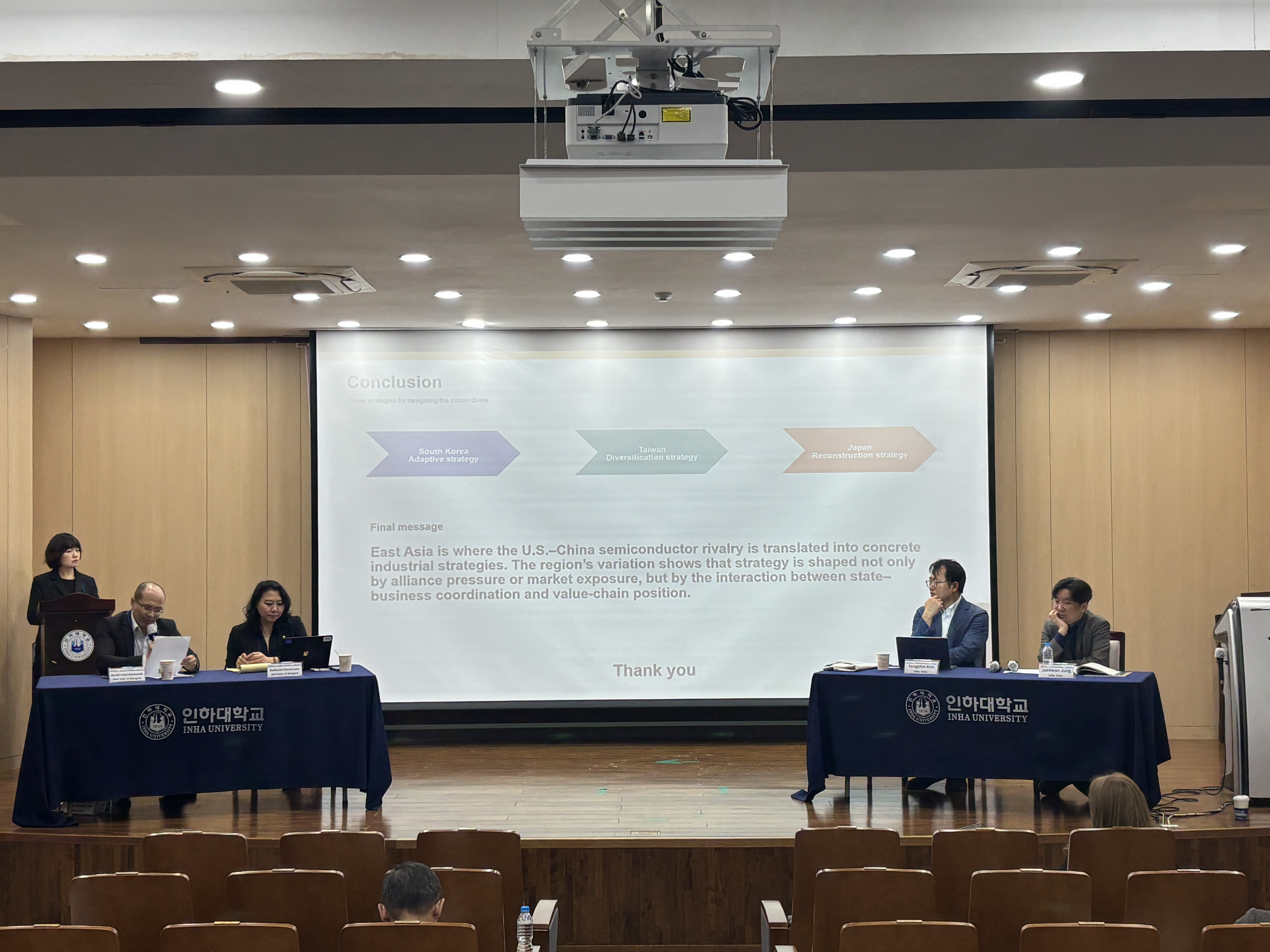
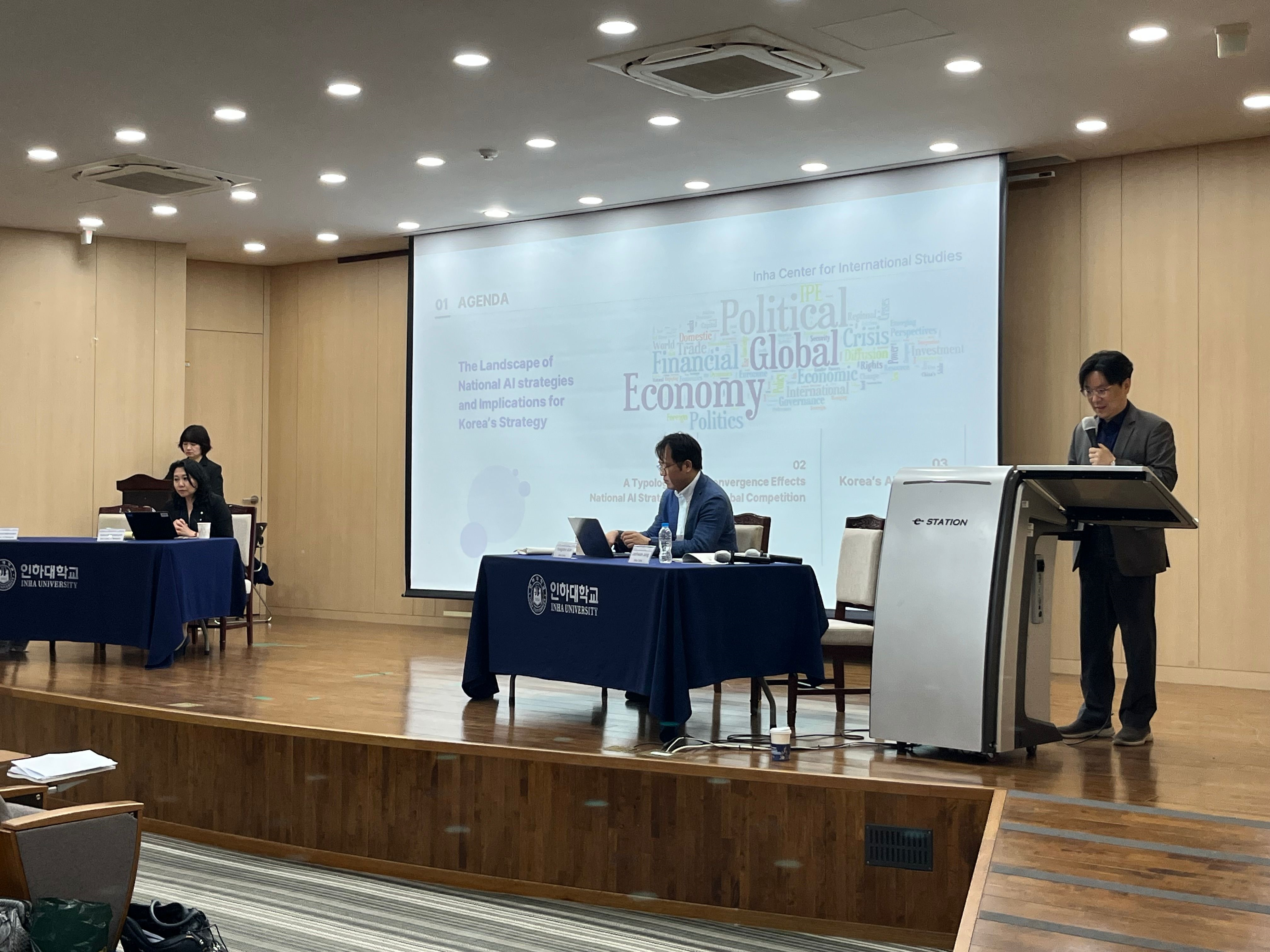
 Session 2, titled “Technology, Industry, and National Strategy in East Asia,” focused on national strategies surrounding AI and semiconductors in East Asia. Professor Jaehwan Chung of Inha University comparatively analyzed the AI national strategies of major countries and presented the characteristics and challenges of Korea’s AI strategy. Professor Yongshin Kim then examined how industrial strategies in East Asia are changing amid the U.S.–China semiconductor competition.


 In this session, Professor Budsuren Davaanyam and Munkh-Ulzii Batmunkh of the National University of Mongolia participated as discussants and shared Mongolian perspectives on AI governance and industrial security issues.


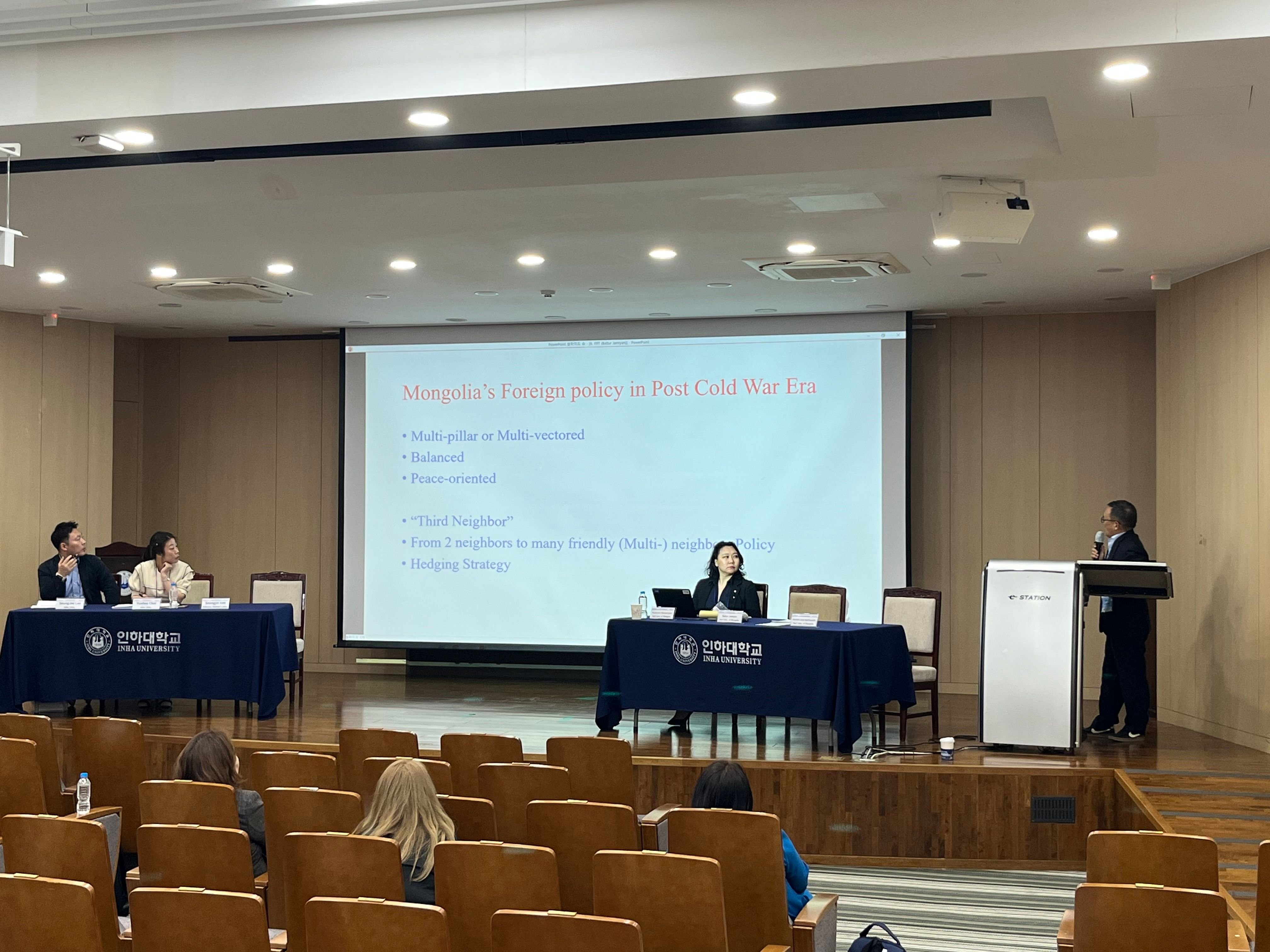
 Session 3, titled “Korea–Mongolia Relations and Regional Foreign Policy Dynamics,” featured in-depth discussions on Korea–Mongolia relations and diplomatic strategies in Northeast Asia. Professor Munkh-Ulzii Batmunkh of the National University of Mongolia analyzed the cultural and behavioral foundations of diplomatic attitudes in Northeast Asia and presented the strategic implications for Korea–Mongolia cooperation. Professor Battur Jamiyan examined Mongolia’s strategic hedging strategy amid great power competition. In addition, Professor Budsuren Davaanyam reviewed the development of treaty relations between Korea and Mongolia since the establishment of diplomatic relations between the two countries.

 As discussants, Professor Sungjin Kim of Duksung Women’s University, Research Fellow Yunhee Choi of the Inha Center for International Studies, and Research Professor Seungjae Lee of the Inha Center for International Studies participated in the discussion.


 This conference was significant in that it explored, from multiple perspectives, potential areas of cooperation and strategic opportunities that Korea and Mongolia can share amid the changing international order in Northeast Asia. In particular, through interdisciplinary discussions encompassing energy, AI, economic security, and diplomatic strategy, the conference sought new directions for Korea–Mongolia cooperation while further strengthening the foundation for continued joint research and international academic exchange between the two institutions.


 The event was jointly organized by the K-Academic Expansion Research Center at the Inha Center for International Studies and the School of Political Science, International Relations and Public Administration at the National University of Mongolia, with support from the Academy of Korean Studies.